The Six Types of Chinese Tea: A Complete Beginner’s Guide to China’s Tea Culture
Tea is one of China’s most beautiful gifts to the world. Long before tea became a global drink, it was already part of daily life in China: served to guests, carried along mountain roads, written into poetry, and enjoyed quietly by families, scholars, farmers, monks, and merchants.
For many Western tea drinkers, Chinese tea can feel mysterious at first. Why are there so many kinds? What is the difference between green tea and white tea? Is Chinese black tea the same as English breakfast tea? And why do some teas, like Pu-erh, become more valuable as they age?
Why Are There Six Types of Chinese Tea?
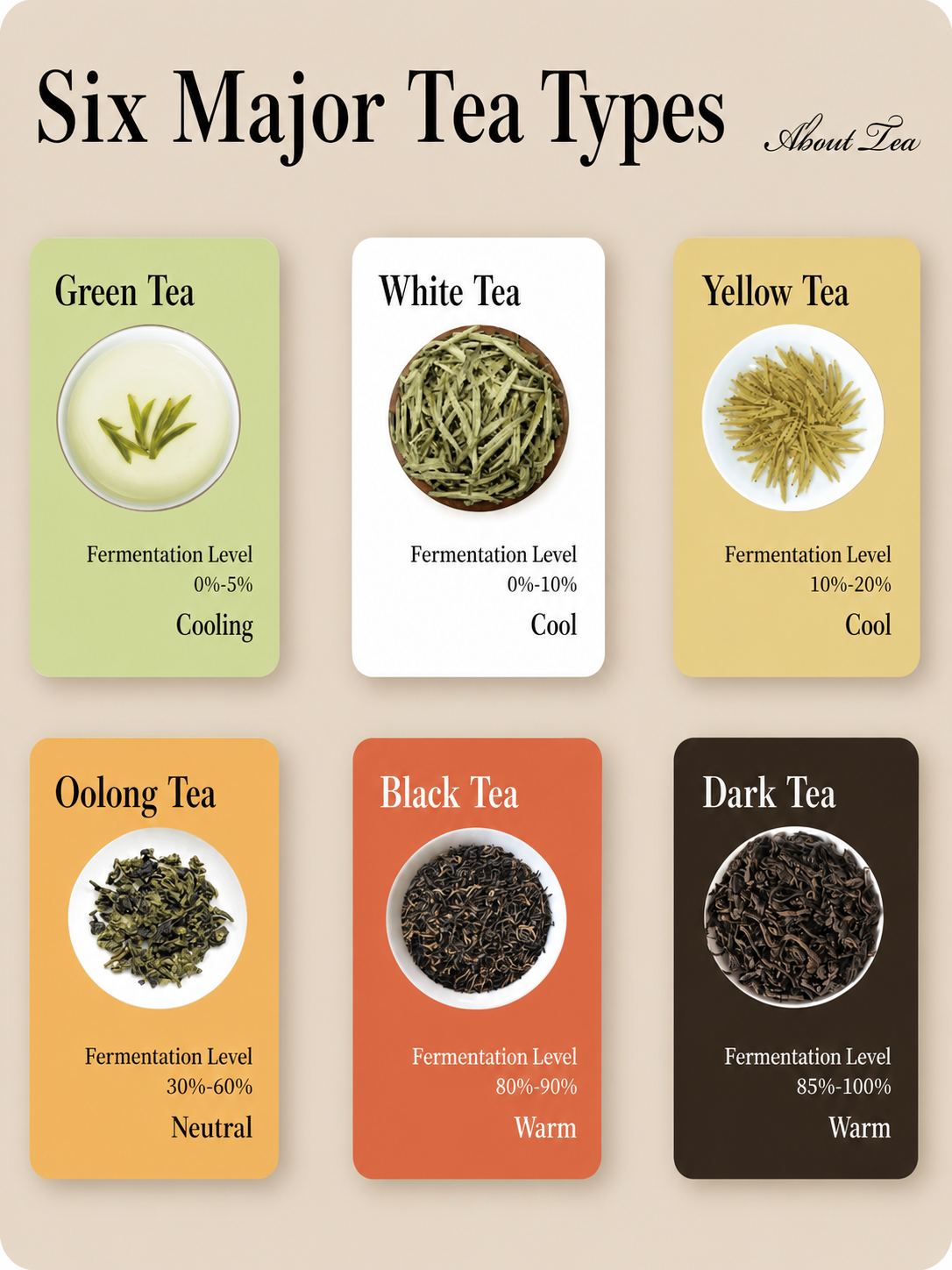
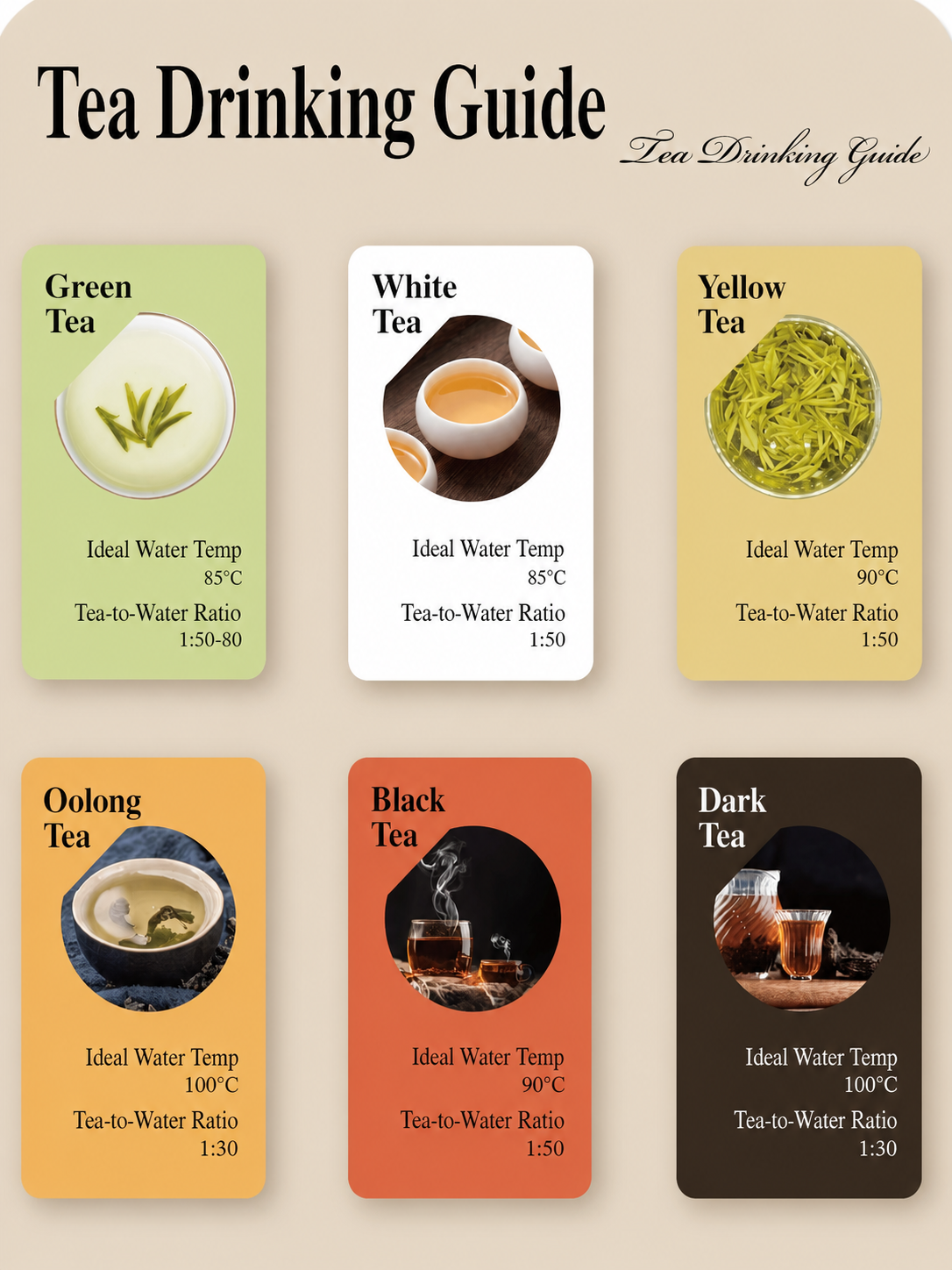
All true tea comes from the same plant, Camellia sinensis. What changes everything is how the leaves are processed. In China, tea is traditionally divided into six major categories: green tea, white tea, yellow tea, oolong tea, black tea, and dark tea.
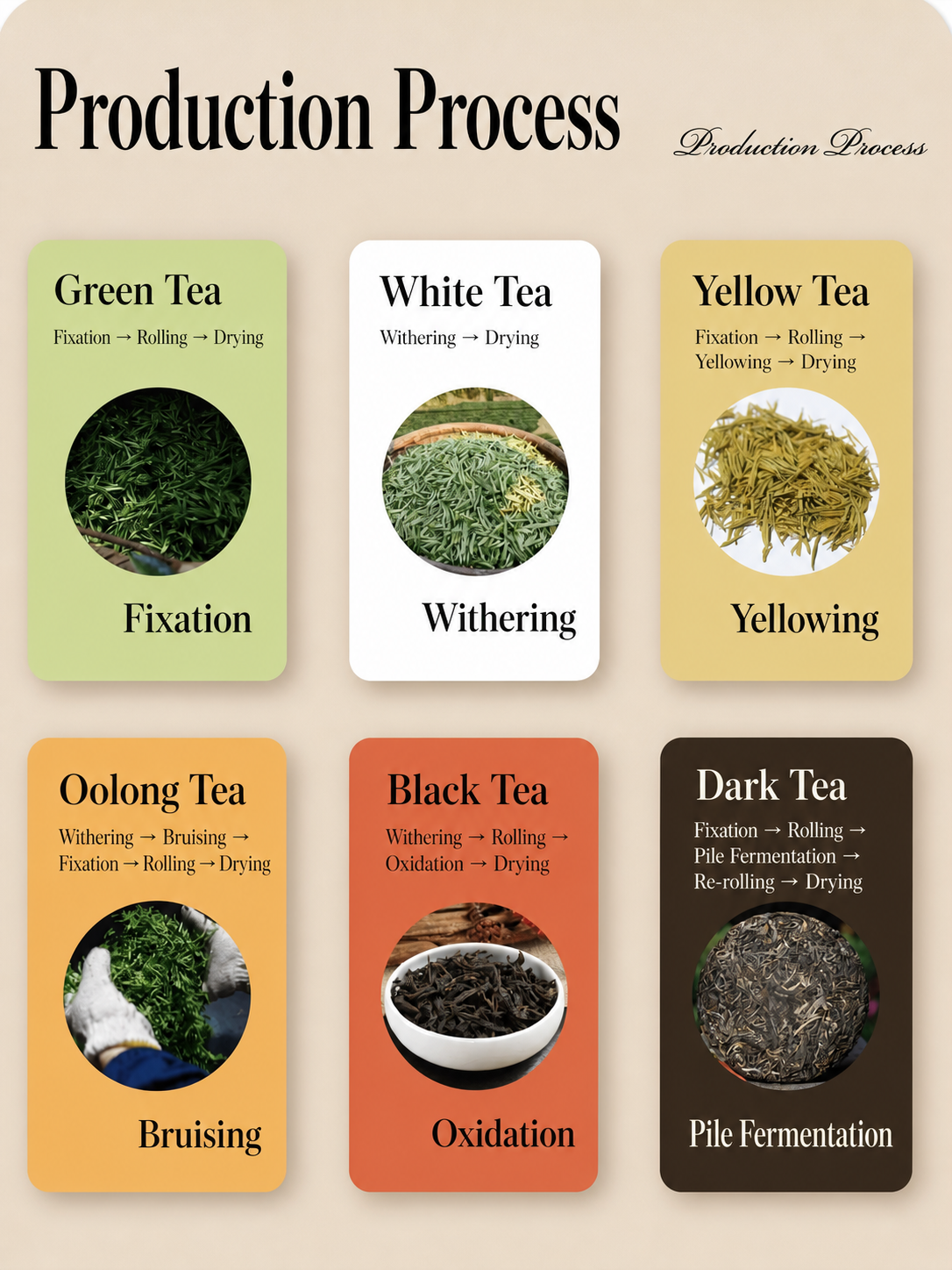
The six types of Chinese tea are mainly classified by processing method, especially the level of oxidation and fermentation. Green tea is not oxidized, white tea is lightly processed, yellow tea is slightly fermented, oolong tea is partially oxidized, black tea is fully oxidized, and dark tea is post-fermented.
A Chinese tea is not only a beverage. It is a conversation between leaf, land, time, fire, water, and people.
Green Tea: The Taste of Spring
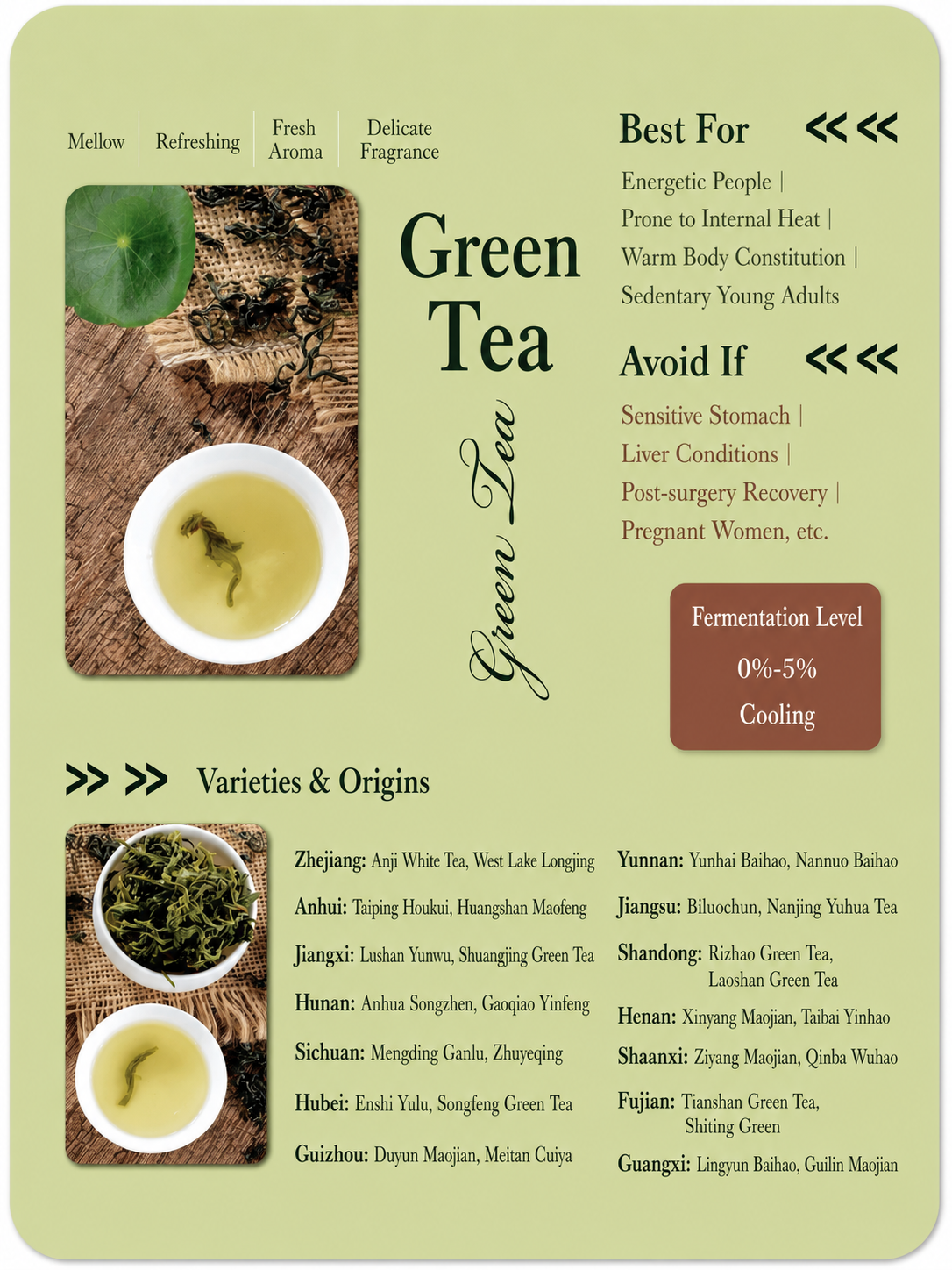
If Chinese tea has a fresh beginning, it is green tea. Green tea is made from leaves that are quickly heated after picking to stop oxidation. This keeps the leaves green and preserves their fresh, delicate aroma.
Green tea often tastes clean, bright, grassy, nutty, or lightly sweet. For many Chinese tea lovers, green tea is the flavor of spring, especially when harvested early in the season.
What Green Tea Tastes Like
- Fresh and grassy
- Lightly sweet
- Nutty or chestnut-like
- Vegetal, like spring greens
- Clean and refreshing
Famous Chinese green teas include Longjing Dragon Well Tea, Biluochun Tea, and Huangshan Maofeng Tea.
How to Brew Green Tea
Green tea is delicate, so avoid boiling water. Recommended water temperature: 70–85°C / 158–185°F. Steeping time: 1–3 minutes.
White Tea: The Gentle Tea That Ages Gracefully
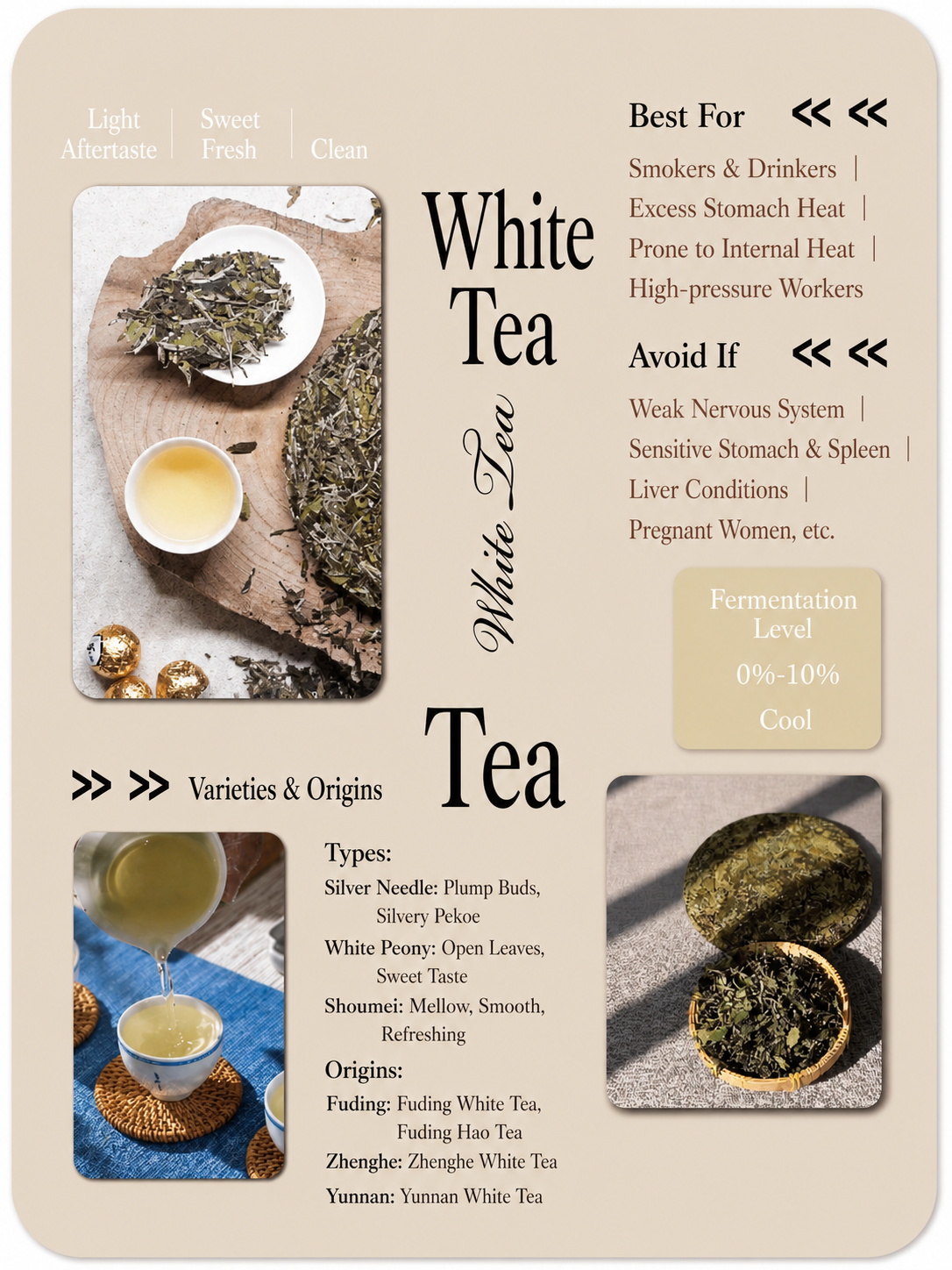
White tea is one of the least processed Chinese teas. The leaves are usually withered and dried with minimal handling. Because of this gentle processing, white tea keeps a natural, soft character.
White tea often tastes light, sweet, floral, and smooth. Some white teas also become deeper and richer with age. In China, there is a saying about white tea: “One year as tea, three years as medicine, seven years as treasure.”
What White Tea Tastes Like
- Light and sweet
- Floral
- Honey-like
- Soft and mellow
- Smooth with a gentle finish
Famous white teas include Baihao Yinzhen / Silver Needle, Bai Mudan / White Peony, and Shou Mei.
How to Brew White Tea
White tea can handle slightly hotter water than green tea, especially if it is aged. Recommended water temperature: 80–90°C / 176–194°F. Steeping time: 2–5 minutes.
Yellow Tea: The Rare Tea Few People Know
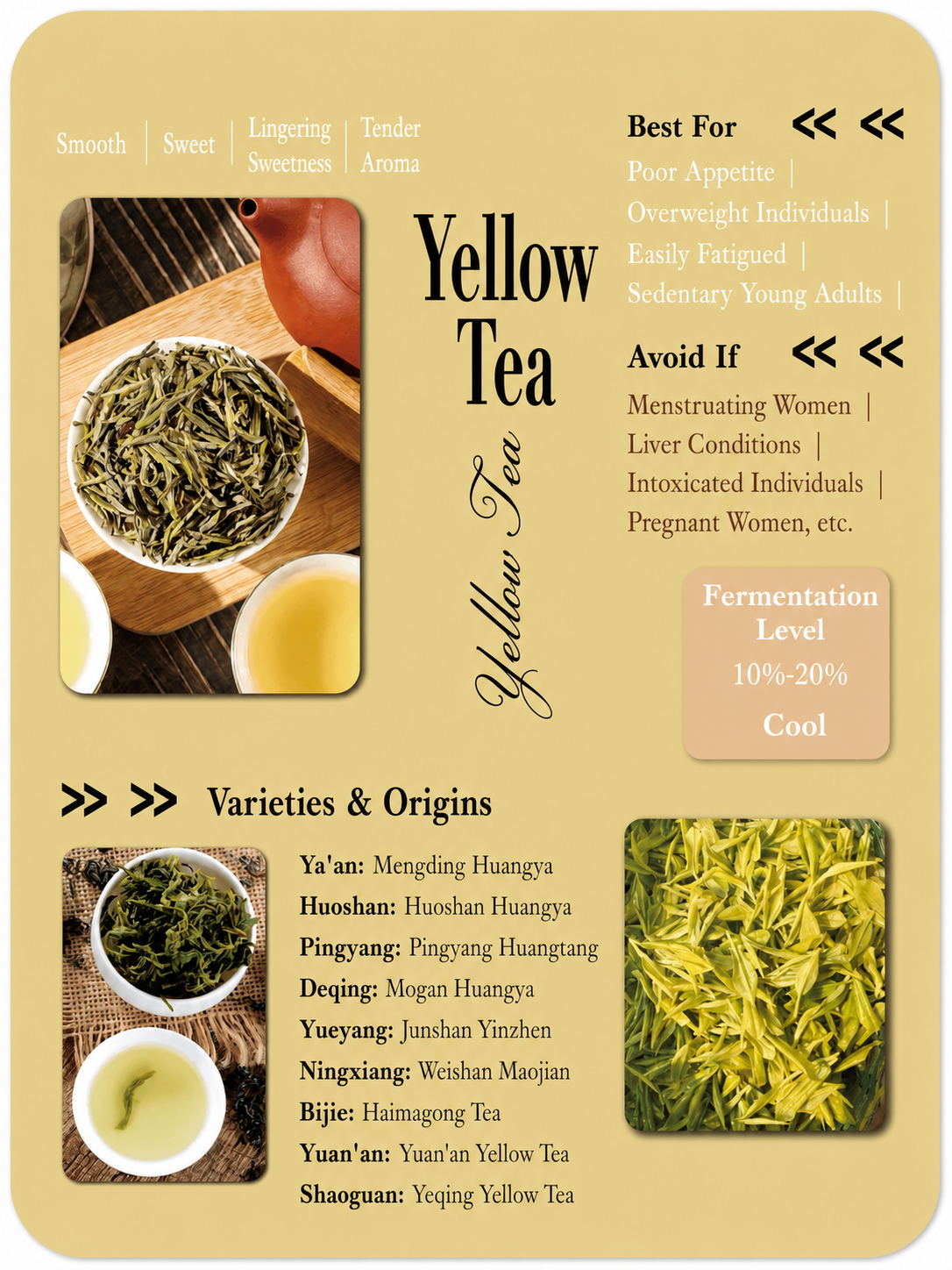
Yellow tea is one of the rarest of the six Chinese tea types. At first glance, it may look similar to green tea, but its processing includes a special step often called sealed yellowing.
During this process, the warm leaves are lightly wrapped or covered, allowing them to develop a softer yellow color and a mellow taste. Yellow tea is not as common as green tea or oolong tea, even in China.
What Yellow Tea Tastes Like
- Mellow and smooth
- Lightly sweet
- Less grassy than green tea
- Soft, warm, and elegant
- Sometimes slightly nutty
Famous yellow teas include Junshan Yinzhen, Mengding Huangya, and Huoshan Huangya.
How to Brew Yellow Tea
Recommended water temperature: 75–85°C / 167–185°F. Steeping time: 2–3 minutes. Use clean, soft water and avoid overbrewing.
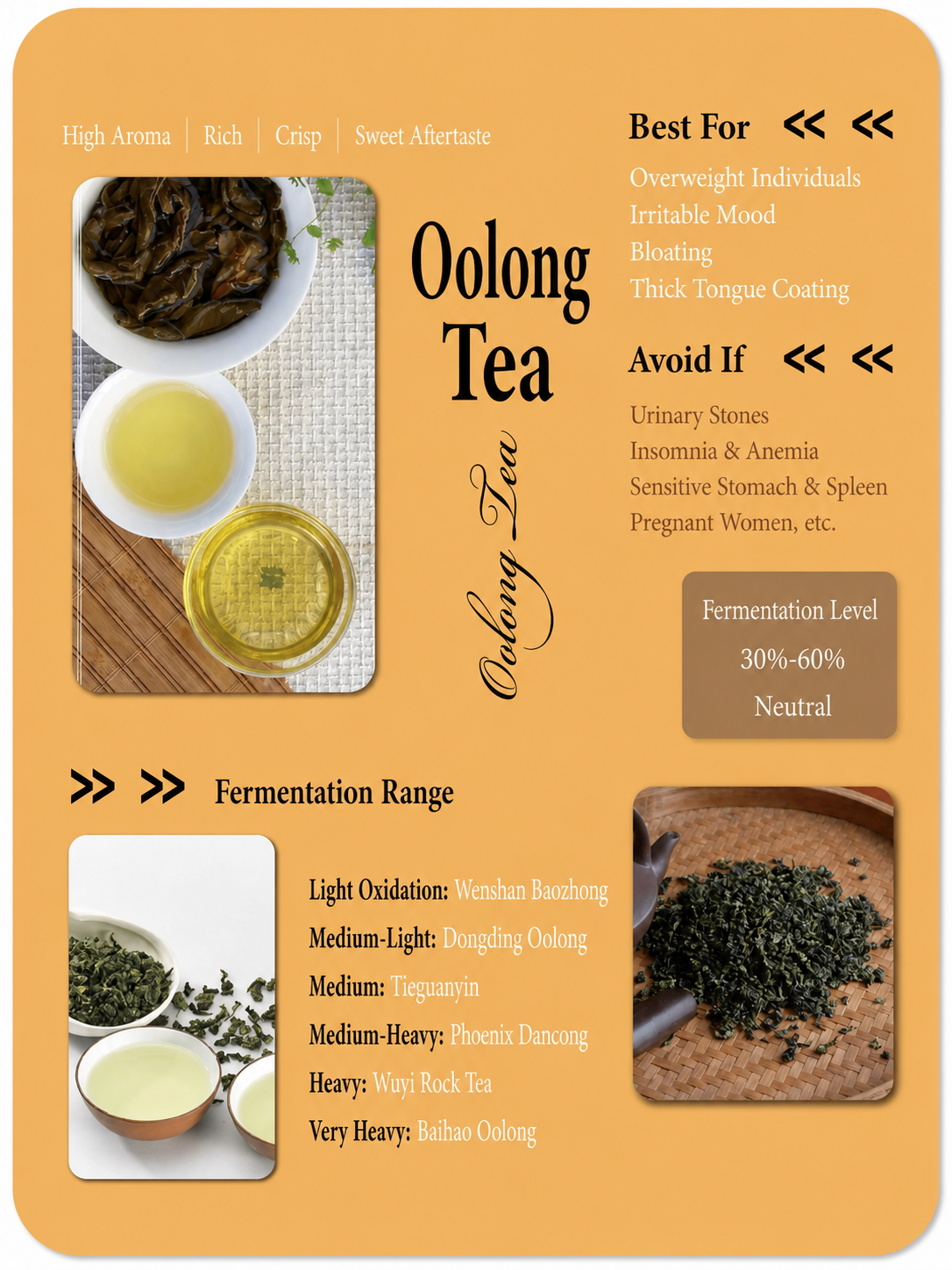
Oolong Tea: Between Green Tea and Black Tea
Oolong tea is one of the most fascinating categories in Chinese tea. It is partially oxidized, which means it sits between green tea and black tea. But that simple explanation does not fully capture its richness.
Oolong can be floral and bright, roasted and mineral, creamy and smooth, or fruity and complex. Some oolongs are lightly oxidized and taste close to green tea. Others are deeply roasted and taste like dark honey, stone fruit, or warm minerals.
What Oolong Tea Tastes Like
- Floral, like orchid or gardenia
- Creamy and smooth
- Fruity, like peach or apricot
- Roasted and nutty
- Mineral and deep
- Sweet with a long aftertaste
Famous oolong teas include Tieguanyin, Wuyi Rock Tea / Yancha, and Dan Cong Oolong.
How to Brew Oolong Tea
Recommended water temperature: 90–100°C / 194–212°F. Steeping time: 20–60 seconds for gongfu style, or 2–4 minutes for Western style.
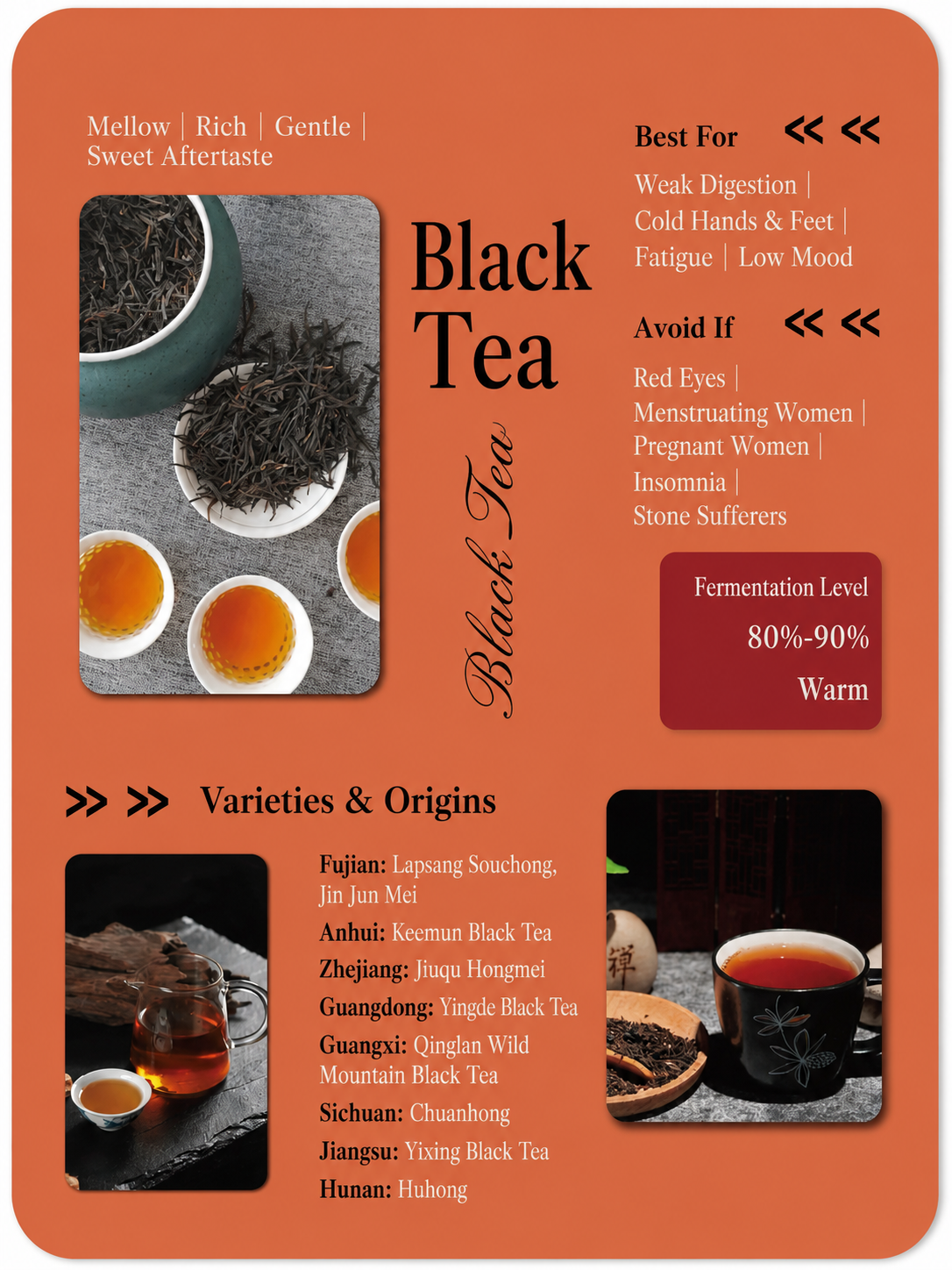
Chinese Black Tea: Known as “Red Tea” in China
What the West calls black tea, China traditionally calls red tea, because the brewed tea liquor is reddish. Chinese black tea is fully oxidized, giving it a rich, warm, sweet, and often malty flavor.
High-quality Chinese black tea can be smooth, naturally sweet, and surprisingly gentle. It is often different from many mass-market black teas used in tea bags.
What Chinese Black Tea Tastes Like
- Malty
- Sweet
- Honey-like
- Fruity
- Cocoa-like
- Smooth and warming
Famous Chinese black teas include Keemun Black Tea / Qimen Hongcha, Dianhong Tea, and Lapsang Souchong / Zhengshan Xiaozhong.
How to Brew Chinese Black Tea
Recommended water temperature: 90–95°C / 194–203°F. Steeping time: 2–4 minutes. Chinese black tea is forgiving and friendly for beginners.
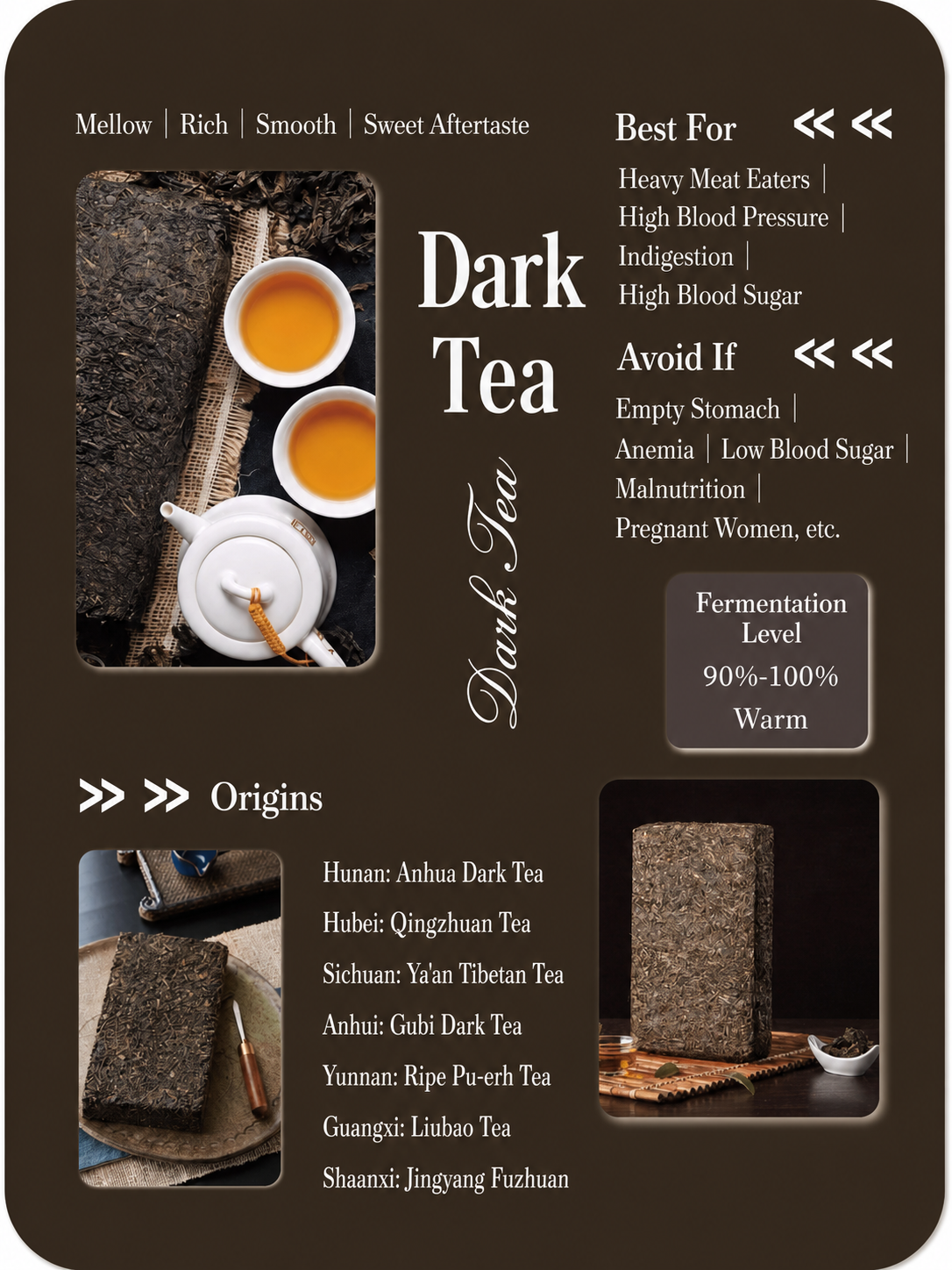
Dark Tea: The Tea That Changes With Time
Dark tea, or Hei Cha, is post-fermented tea. Unlike green tea or black tea, dark tea continues to change through microbial fermentation and aging. The most famous dark tea in the world is Pu-erh tea, especially from Yunnan.
Pu-erh tea is unique because it is deeply connected to mountains, ancient tea trees, traditional processing, and time. Some Pu-erh teas are fresh and powerful when young. Others become smoother, deeper, and more complex after years of storage.
What Dark Tea and Pu-erh Taste Like
- Earthy
- Woody
- Smooth
- Sweet aftertaste
- Aged and mellow
- Sometimes herbal, mineral, or dried-fruit-like
Pu-erh tea is often divided into two main types: raw Pu-erh / Sheng Pu-erh and ripe Pu-erh / Shou Pu-erh.
Ancient Tree Pu-erh Tea
One of the most fascinating parts of Pu-erh culture is ancient tree tea. In Yunnan, some tea trees are over 100 years old. These old trees grow in mountain forests, often surrounded by moss, wild plants, mist, and biodiversity.
Ancient tree Pu-erh is valued not only for age, but also for the environment in which the trees grow. Many tea lovers describe ancient tree Pu-erh as having deeper mouthfeel, layered aroma, stronger aftertaste, and a more natural forest character.
How to Brew Pu-erh Tea
Recommended water temperature: 95–100°C / 203–212°F. Use short infusions for gongfu brewing, or 3–5 minutes for Western style. Pu-erh tea can be brewed many times, and later infusions may become smoother and sweeter.
Quick Comparison: The Six Types of Chinese Tea
How to Choose the Right Chinese Tea for You
Choose green tea if you like freshness. Choose white tea if you like softness. Choose yellow tea if you want something rare. Choose oolong tea if you love aroma. Choose Chinese black tea if you want comfort. Choose Pu-erh tea if you like depth, aging, history, and story.
The Beauty of Chinese Tea Culture
Chinese tea culture is not only about choosing a drink. It is about learning how to notice small things: the color of the dry leaves, the sound of hot water touching the tea, the first rising aroma, and the quiet feeling after drinking.
In Chinese tea culture, tea is often connected with hospitality, respect, patience, and harmony. When guests arrive, tea is offered. When friends gather, tea creates conversation. When someone wants a quiet moment alone, tea becomes company.
A Simple Chinese Tea Brewing Guide for Beginners
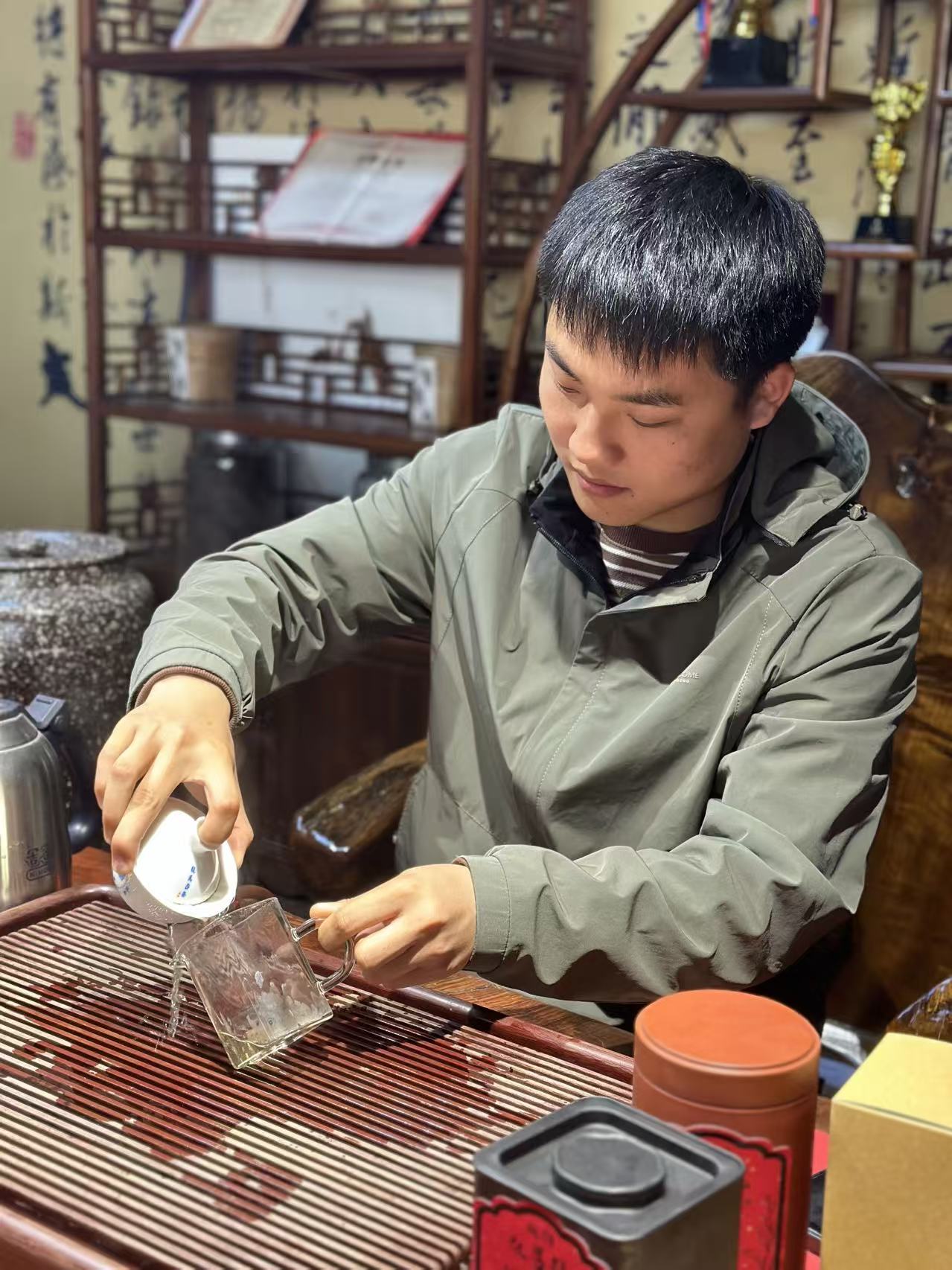
You do not need complicated tools to enjoy Chinese tea. To begin, you only need good loose-leaf tea, clean water, a teapot, mug, or gaiwan, and a little patience.
The most important rule is simple: do not rush the tea. Let the leaves open. Smell the aroma. Taste slowly. Good tea often reveals itself cup by cup.
Final Thoughts: Six Teas, One Culture
The six types of Chinese tea are more than categories. They are six different doors into Chinese culture. Green tea shows the freshness of spring. White tea shows the beauty of simplicity. Yellow tea shows rare craftsmanship. Oolong tea shows transformation and aroma. Black tea shows warmth and sweetness. Dark tea shows time, age, and memory.
Whether you are drinking a fresh green tea, a floral oolong, a smooth black tea, or an aged Pu-erh from ancient trees in Yunnan, you are tasting more than leaves. You are tasting mountain air, human skill, seasonal change, and a culture that has learned to find beauty in quiet moments.