
Ancient Tree Pu-erh Tea: Why 100-Year-Old Tea Trees Matter
Ancient tree Pu-erh tea is one of the most fascinating categories in Chinese tea. For many tea lovers, it represents old tea forests, deep roots, mountain terroir, slow growth, and a more layered drinking experience.
But what does “ancient tree tea” really mean? In the Pu-erh tea market, tea trees over 100 years old are commonly described as ancient tea trees. These trees are often found in Yunnan’s old tea mountains, especially in regions such as Xishuangbanna, Lincang, Pu’er, and Baoshan.
For Western tea lovers who are new to Pu-erh, understanding ancient tree tea can help you choose better tea, avoid misleading claims, and appreciate why some Pu-erh teas are more valuable than others.
What Is Ancient Tree Pu-erh Tea?
Ancient tree Pu-erh tea usually refers to Pu-erh tea made from old tea trees that have grown for more than 100 years.
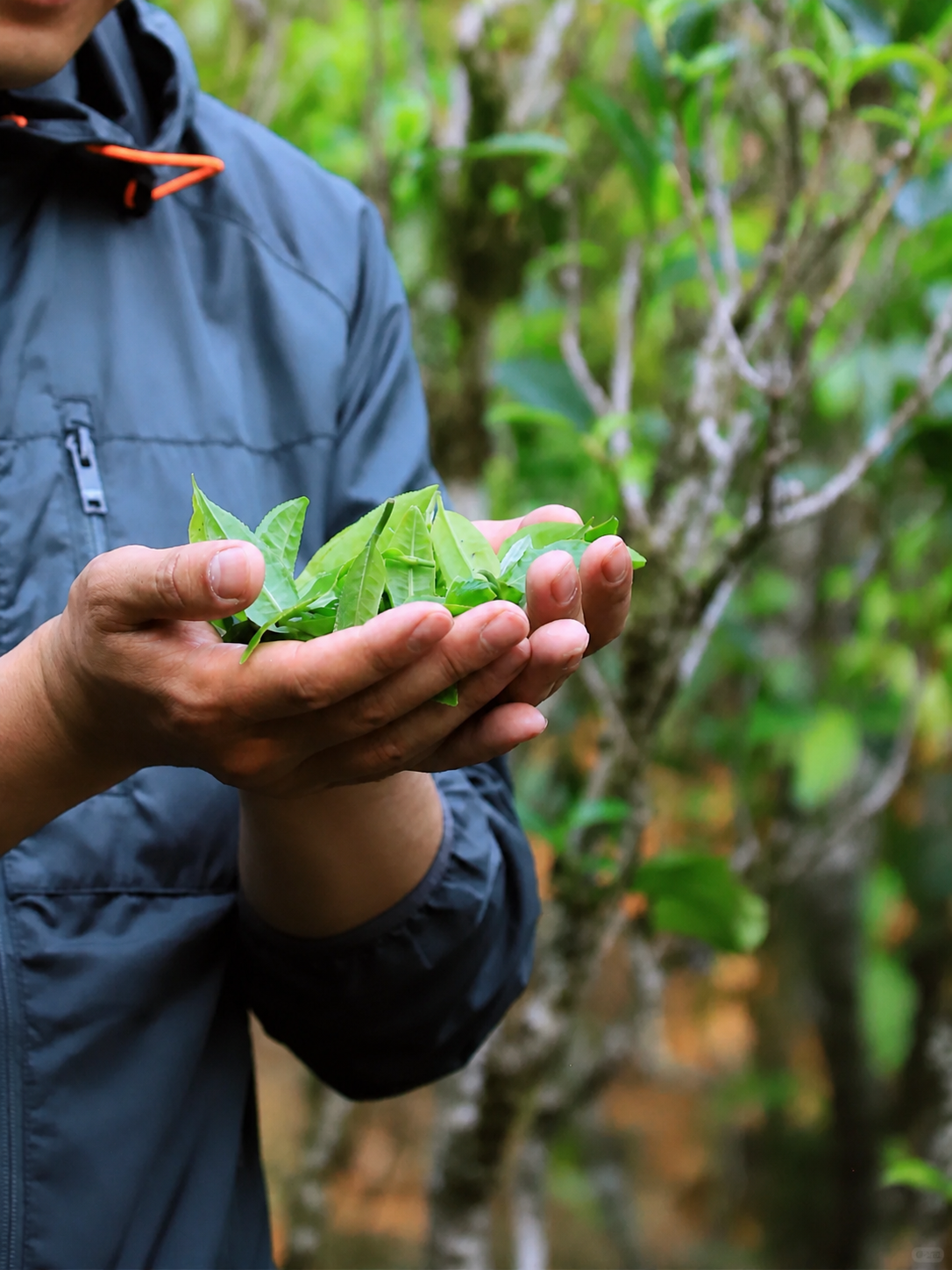
In Yunnan tea culture, these trees are often part of old tea gardens, semi-wild tea forests, or traditional mountain villages. Unlike young plantation tea bushes, ancient tea trees usually have deeper root systems and grow in more complex natural environments.
This does not mean every ancient tree tea is automatically better. Processing, storage, origin, picking standard, and honesty from the seller are still very important. However, well-made ancient tree Pu-erh tea is often appreciated for its depth, texture, aftertaste, and mountain character.
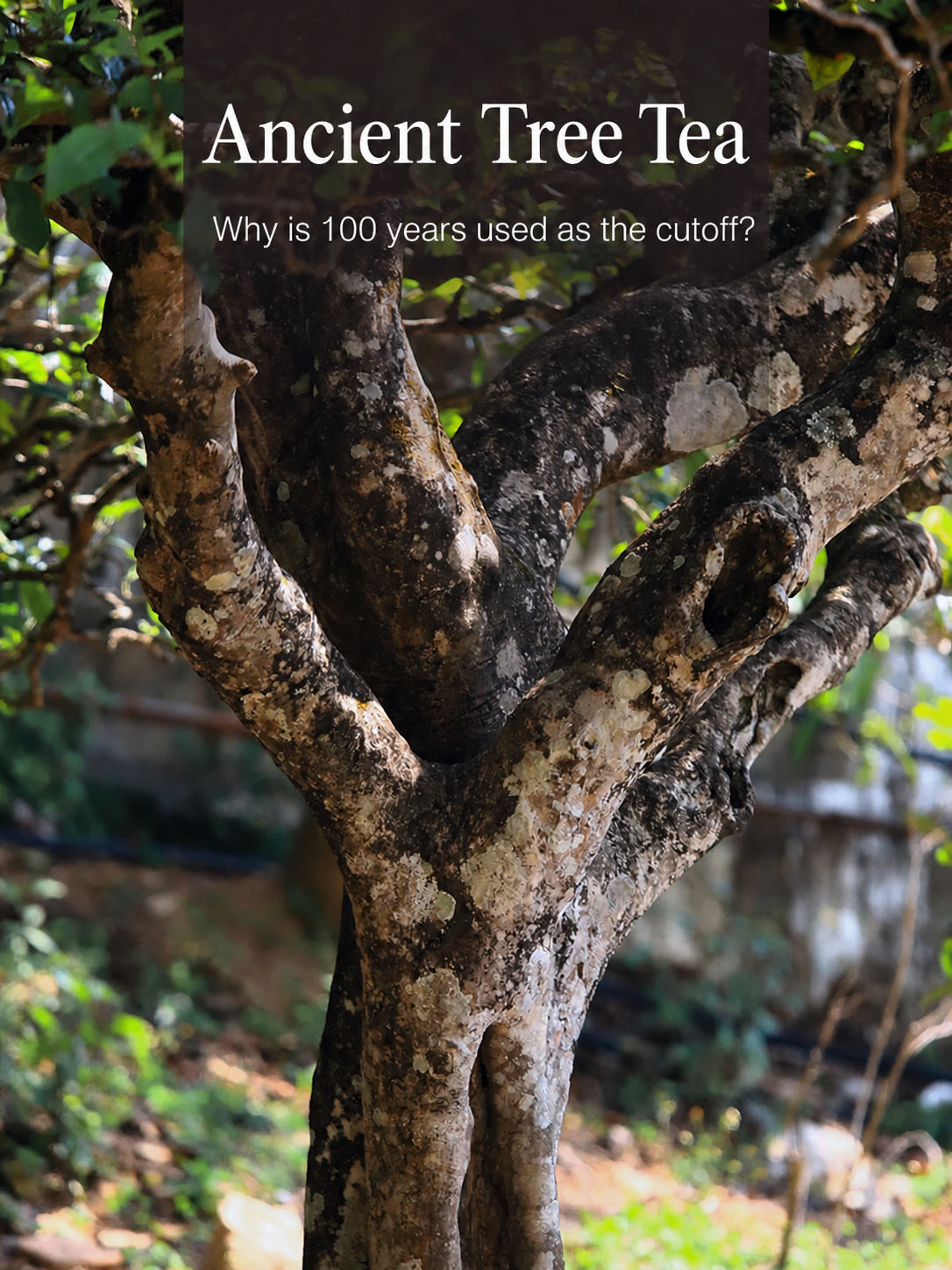
Why Is 100 Years Used as the Standard?
In the tea market, 100 years is commonly used as the basic line between ordinary mature tea trees and ancient tea trees.
A tea tree that has grown for more than a century usually has a deeper root system, slower growth, and a more stable natural environment around it. These conditions may help create a tea with richer texture, stronger aftertaste, and more complex aroma.
Both can be enjoyable, but they offer different drinking experiences.
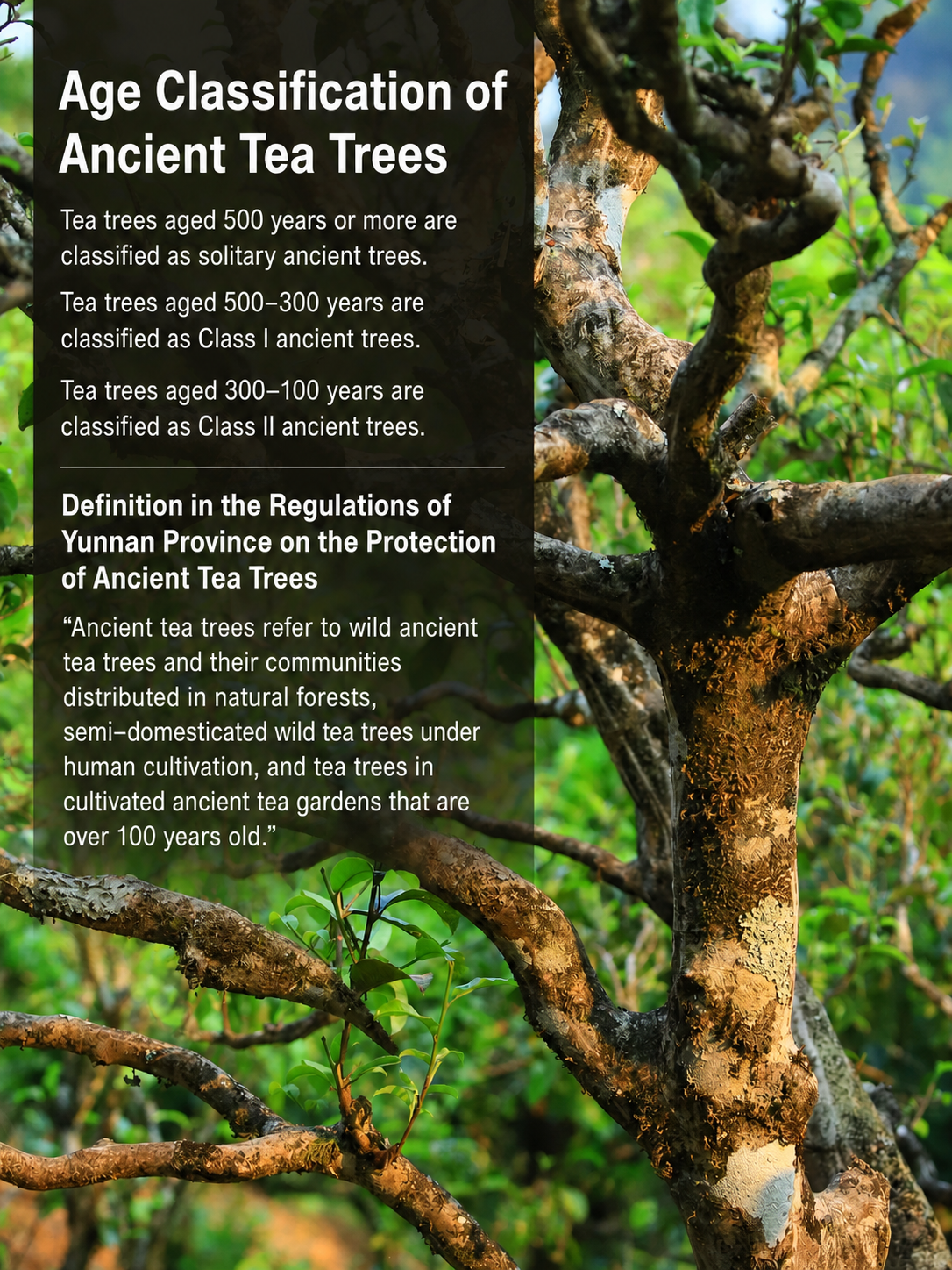
Age Classification of Ancient Tea Trees
In Chinese Pu-erh tea discussions, ancient tea trees are often divided into different age groups.
Buyers should be careful with very old tree claims. Age claims should be supported by trustworthy origin information, not only marketing language.
How Does Ancient Tree Pu-erh Tea Taste?
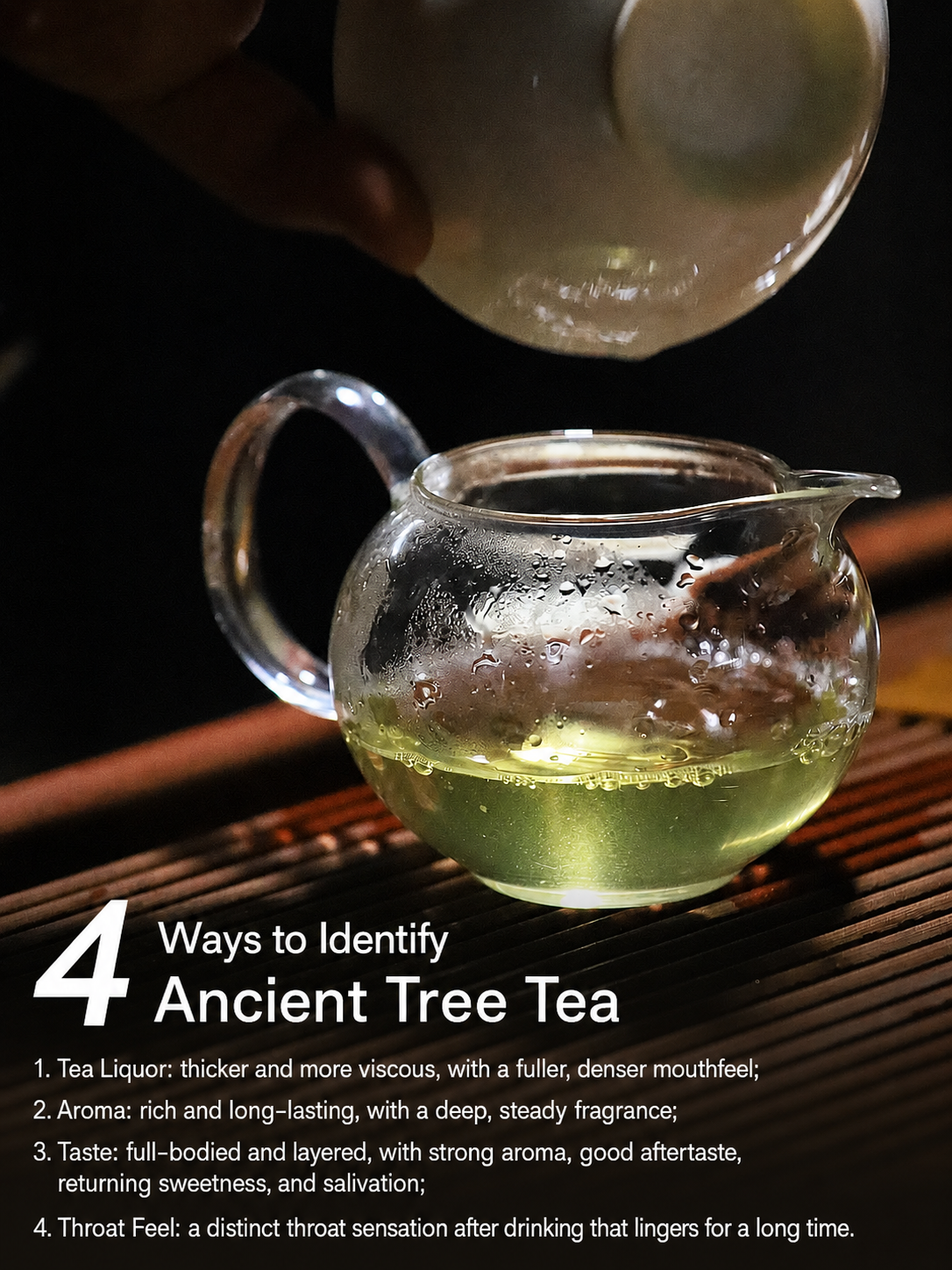
Ancient tree Pu-erh tea does not have only one flavor. Its taste depends on the mountain, village, season, processing, and storage. But many well-made ancient tree Pu-erh teas share some common qualities.
1. Thicker Tea Soup
Ancient tree tea often feels thicker and smoother in the mouth. Tea drinkers sometimes describe this as a rich, full, or viscous texture. The tea soup may feel more rounded, not thin or watery.
2. Deeper Aroma
Because old tea trees grow in complex mountain environments, the aroma can feel more stable and layered. Common aroma notes may include orchid, honey, wildflowers, forest wood, herbs, dried fruit, or mineral sweetness.
3. Richer Taste
Good ancient tree Pu-erh tea often has a strong inner character. The bitterness and astringency may exist, especially in raw Pu-erh, but they usually transform into sweetness and salivation.
4. Long-Lasting Throat Feeling
Many Chinese tea drinkers value “throat feeling” when drinking Pu-erh tea. This means the pleasant sensation that remains in the throat after swallowing. A good ancient tree tea may leave a clear, sweet, and long-lasting feeling after drinking.
Can You Identify Real Ancient Tree Tea by Taste Alone?
Taste can give clues, but it cannot prove everything. A thick tea soup, strong aroma, rich flavor, and long aftertaste may suggest good raw material, but they do not guarantee that the tea is truly from ancient trees.
When buying ancient tree Pu-erh tea, it is better to look at several factors together:
- Clear origin information
- Honest harvest description
- Reliable seller reputation
- Clean aroma and storage
- Balanced taste
- Good aftertaste
- Transparent photos or sourcing story
- Reasonable price for the claimed origin
If a tea is advertised as rare ancient tree tea but the price is unusually low, it is worth being cautious.
Ancient Tree Tea vs Plantation Tea
Ancient tree tea and plantation tea are not the same, but both can have value.
Ancient Tree Tea
Ancient tree tea usually comes from older trees in traditional mountain environments. It is often valued for texture, depth, aftertaste, and origin character. It is usually more limited in quantity and more expensive.
Plantation Tea
Plantation tea comes from managed tea gardens. It is usually easier to produce in larger quantities and can be more affordable. Good plantation tea can still be clean, fresh, and enjoyable, especially for daily drinking.
The best choice depends on your purpose. If you want daily tea, plantation tea can be practical. If you want to explore deeper Pu-erh character, ancient tree tea is worth trying.
Is Ancient Tree Pu-erh Better for Aging?
Ancient tree raw Pu-erh is often valued for aging potential. Good raw material, proper processing, and clean storage can allow the tea to become smoother and more complex over time.
However, age of the tea tree is only one part of the story. A tea with poor processing or bad storage will not become excellent simply because it comes from old trees.
How to Brew Ancient Tree Pu-erh Tea
Ancient tree Pu-erh is best brewed with patience. Gongfu brewing is ideal because it allows you to taste the tea across many infusions.
Good ancient tree Pu-erh can often be brewed many times, with the flavor changing from infusion to infusion.
How to Choose Ancient Tree Pu-erh Tea
If you are buying ancient tree Pu-erh for the first time, do not only chase famous names or old tree claims. Here are some simple buying tips.
Choose the Right Region
Yiwu is often soft, sweet, and elegant. Jingmai is often floral and aromatic. Bingdao can be sweet, clear, and cooling. Bulang and Lao Banzhang styles are often stronger and more powerful. Choose based on your taste preference, not only reputation.
Start with Smaller Sizes
If you are new to ancient tree Pu-erh, start with samples, dragon balls, or small cakes before buying a full 357g cake.
Avoid Overly Perfect Claims
Be careful with vague descriptions such as “wild ancient tree,” “500-year-old tree,” or “rare old tree tea” without origin details. Good sellers should explain where the tea comes from and how it tastes.
Trust Your Mouth
At the end, the tea should feel clean, balanced, and enjoyable. If the tea smells sour, moldy, smoky in an unpleasant way, or chemically strange, avoid it.
Final Thoughts
Ancient tree Pu-erh tea is special because it connects tea drinkers with Yunnan’s old tea forests, mountain villages, and long tea-making history.
The 100-year standard helps us understand why these teas are valued, but it should not be the only thing we look at. A truly good ancient tree Pu-erh tea should have clean aroma, rich texture, balanced taste, returning sweetness, and a long aftertaste.
For Western tea lovers, ancient tree Pu-erh is a beautiful way to explore Chinese tea beyond simple flavor. It is a tea of time, place, patience, and depth.
If you are just beginning, start with a clean and approachable ancient tree raw Pu-erh from a trusted Yunnan origin. Brew it slowly, taste across many infusions, and let the tea reveal itself cup by cup.