Pu-erh Tea for Beginners: Raw vs Ripe, Ancient Trees, Blends and Storage
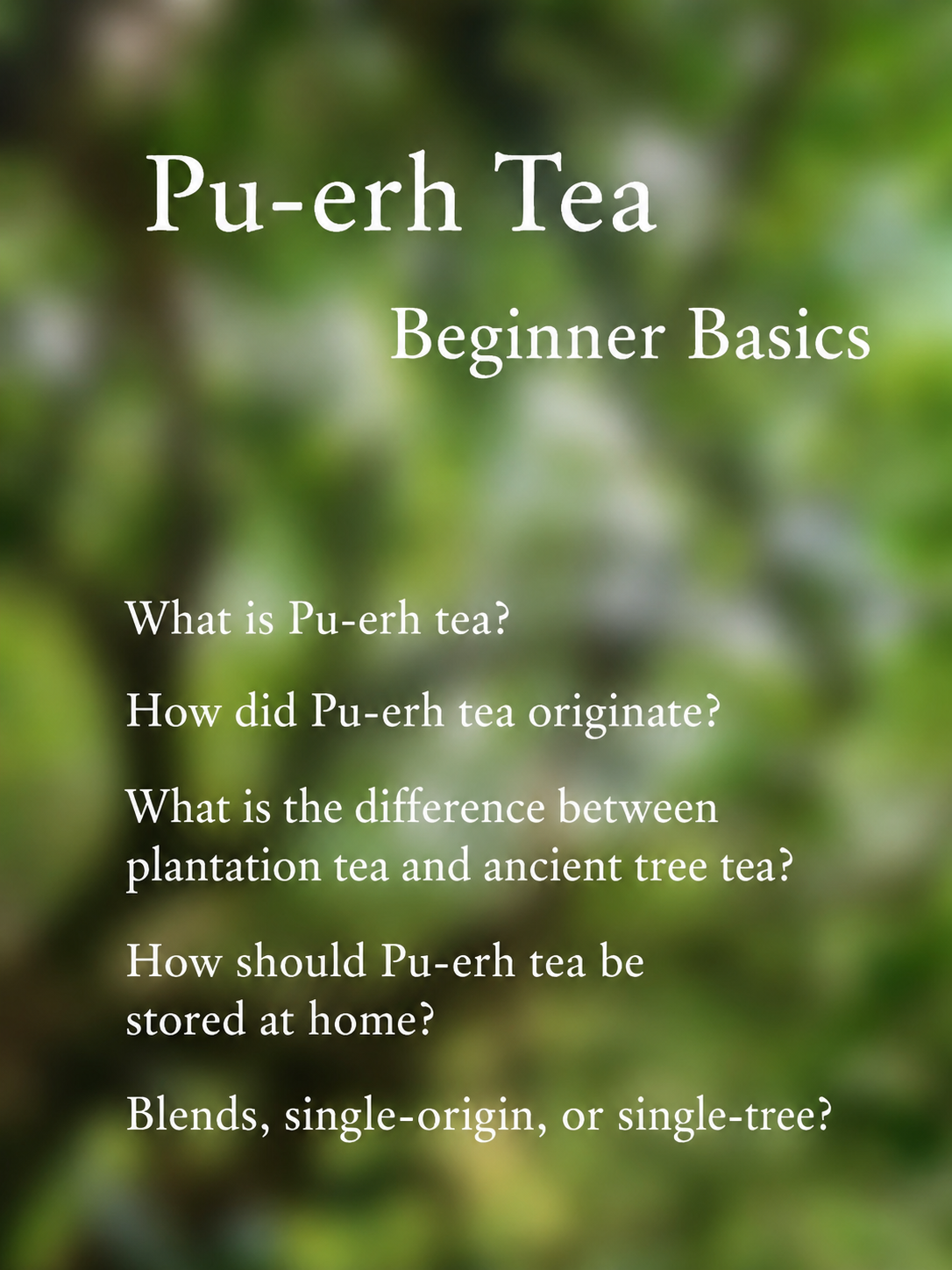
Pu-erh tea can feel mysterious when you first discover it. Some Pu-erh comes as loose tea. Some is pressed into round cakes. Some tastes fresh, floral and slightly bitter. Some tastes dark, earthy and smooth.
You may also see words such as raw Pu-erh, ripe Pu-erh, ancient tree tea, plantation tea, single origin, blend and aged tea. For many Western tea lovers, Pu-erh tea is one of the most fascinating parts of Chinese tea culture.
It is often called a tea of time because it can change during storage and become deeper, smoother and more complex. This beginner’s guide will help you understand what Pu-erh tea is, where it comes from, how raw and ripe Pu-erh are different, what ancient tree tea means, how to understand blends and single-tree tea, and how to store Pu-erh tea at home.
What Is Pu-erh Tea?
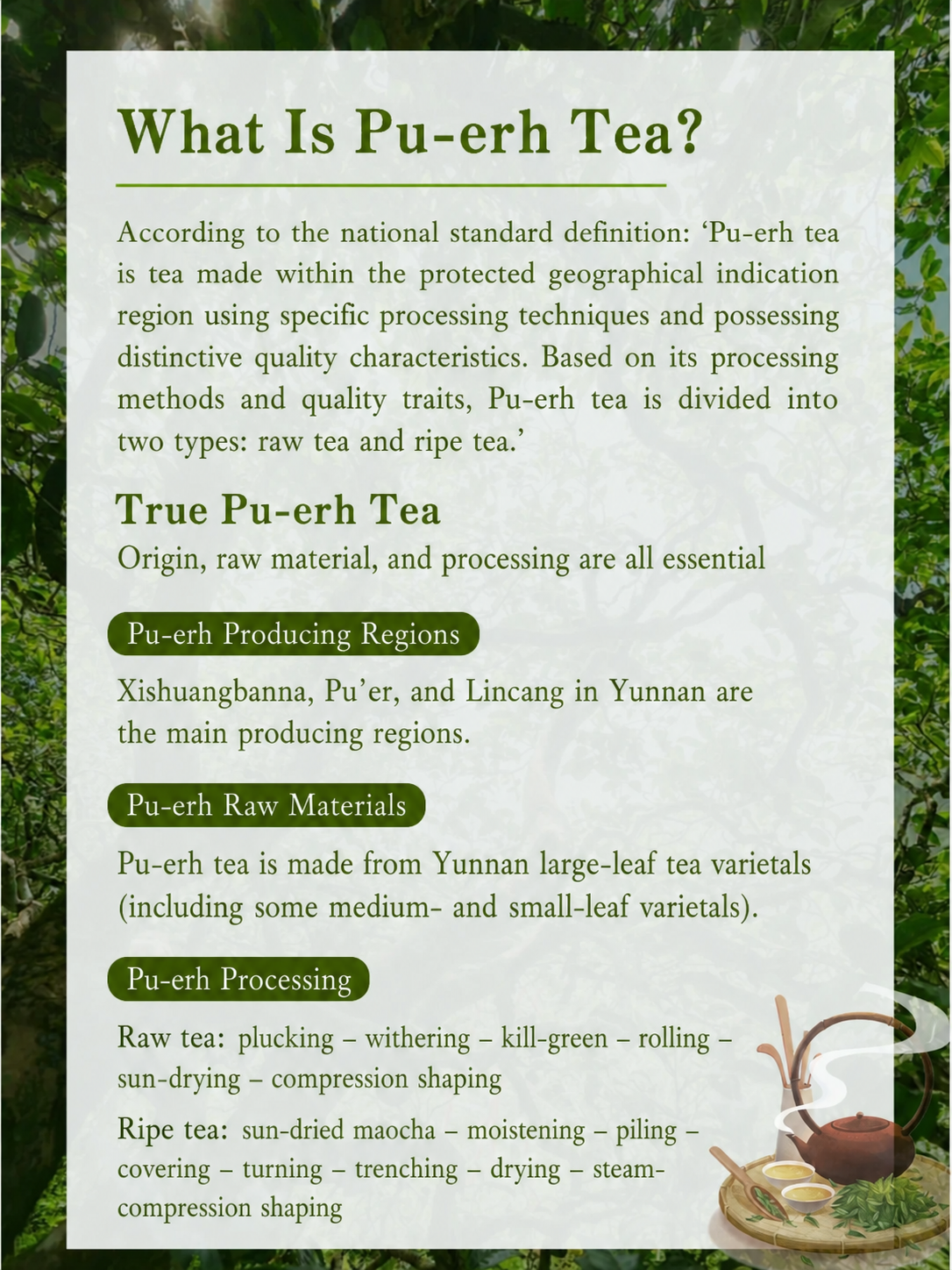
Pu-erh tea, also written as Pu’er or Puerh, is a traditional Chinese tea from Yunnan Province.
True Pu-erh tea depends on three important factors: origin, raw material and processing. In simple words, Pu-erh tea is made from tea leaves grown in the protected Pu-erh tea production area of Yunnan and processed with specific traditional methods.
According to processing style and quality characteristics, Pu-erh tea is generally divided into two main types: raw Pu-erh tea and ripe Pu-erh tea.
Raw Pu-erh Tea
Raw Pu-erh is also called Sheng Pu-erh. It is usually made through a traditional process: fresh leaves, withering, kill-green, rolling, sun drying, steaming and pressing.
Young raw Pu-erh often tastes fresh, bright, floral, grassy and slightly bitter. A good raw Pu-erh may have strong returning sweetness, salivation and a clean aftertaste.
As raw Pu-erh ages, the taste may become smoother, deeper and more complex. The fresh green notes may gradually transform into honey, dried fruit, wood, herbal or aged sweetness.
Raw Pu-erh is a good choice if you enjoy lively tea with changing layers across many infusions.
Ripe Pu-erh Tea
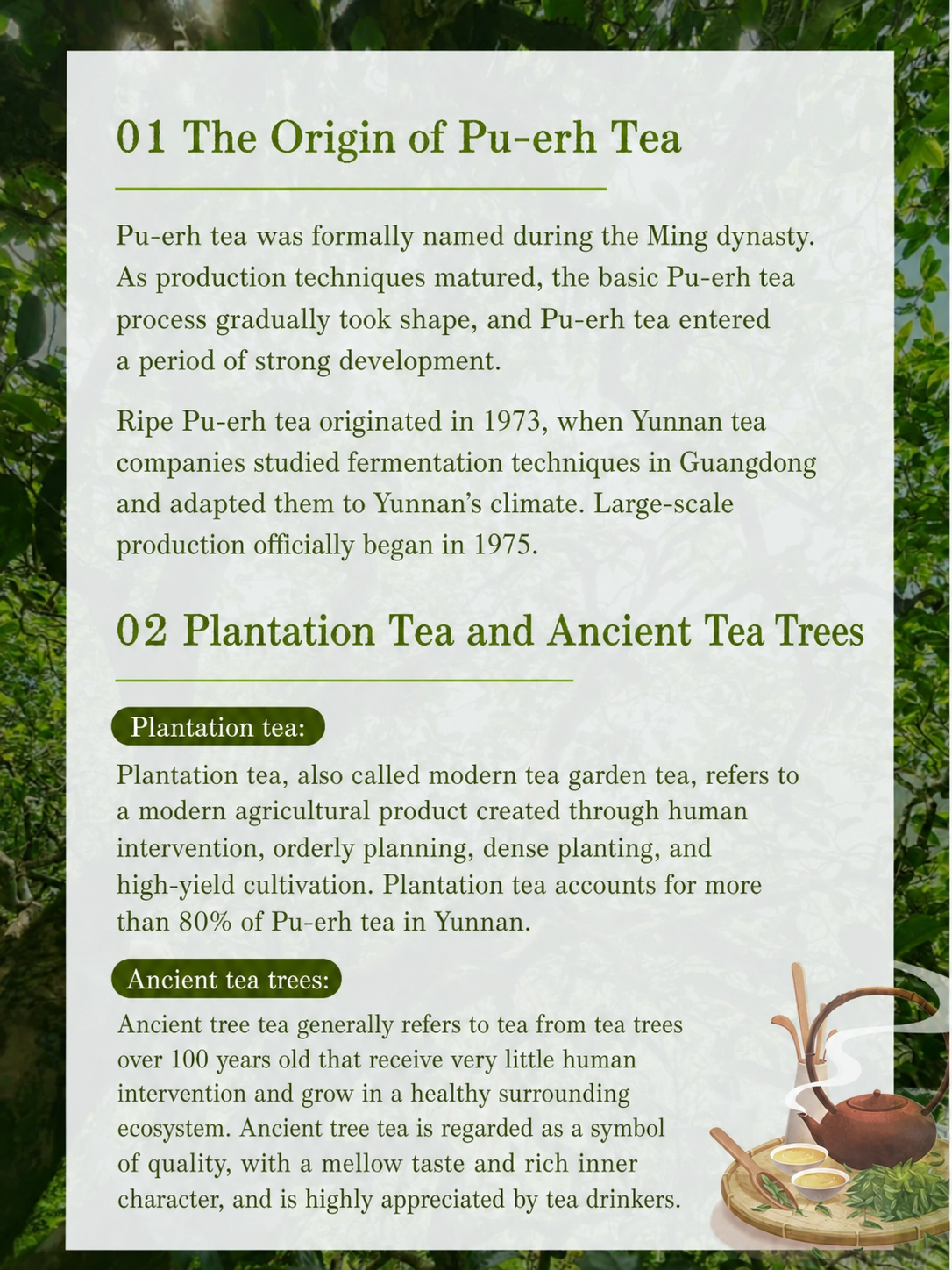
Ripe Pu-erh is also called Shou Pu-erh. Ripe Pu-erh was developed later than raw Pu-erh. It is commonly said that the modern ripe Pu-erh process began in the 1970s, when Yunnan tea producers studied fermentation methods and adapted them to Yunnan’s climate and tea materials.
The basic ripe Pu-erh process includes sun-dried maocha, moistening, piling, covering, turning the pile and drying. This process is often called wet piling fermentation. It helps the tea mature faster and creates a darker, smoother, earthy flavor.
Ripe Pu-erh usually has a red-brown tea liquor and a mellow taste. Good ripe Pu-erh may show notes of wood, dates, nuts, cacao, clean earth or forest floor.
For beginners, ripe Pu-erh is often easier to drink because it is smooth and less sharp than young raw Pu-erh.
Raw Pu-erh vs Ripe Pu-erh
Raw and ripe Pu-erh are not the same tea. Raw Pu-erh changes slowly through natural aging. Ripe Pu-erh goes through a controlled fermentation process.
Raw Pu-erh can become darker and smoother over time, but it does not become ripe Pu-erh. Time can change the flavor, but it cannot change the original production method.
Plantation Tea vs Ancient Tree Tea
When buying Pu-erh tea, you may see terms such as plantation tea and ancient tree tea.
Plantation Tea
Plantation tea is also called modern tea garden tea. It usually comes from tea gardens that are managed, pruned, planned and planted for higher production.
Plantation tea makes up a large part of Yunnan Pu-erh tea production. It can be affordable, clean and suitable for daily drinking. Not all plantation tea is low quality. A well-made plantation Pu-erh can still be enjoyable and practical.
Ancient Tree Tea
Ancient tree tea usually refers to tea made from old tea trees over 100 years old. These trees often grow in traditional tea mountains, old tea gardens or more natural forest environments.
Compared with young plantation bushes, ancient tea trees usually have deeper roots and slower growth. Good ancient tree Pu-erh is often valued for thicker tea soup, deeper aroma, richer taste, stronger returning sweetness, long-lasting aftertaste and clear mountain character.
However, tree age alone does not guarantee quality. Processing, storage, origin and honesty from the seller are also very important.
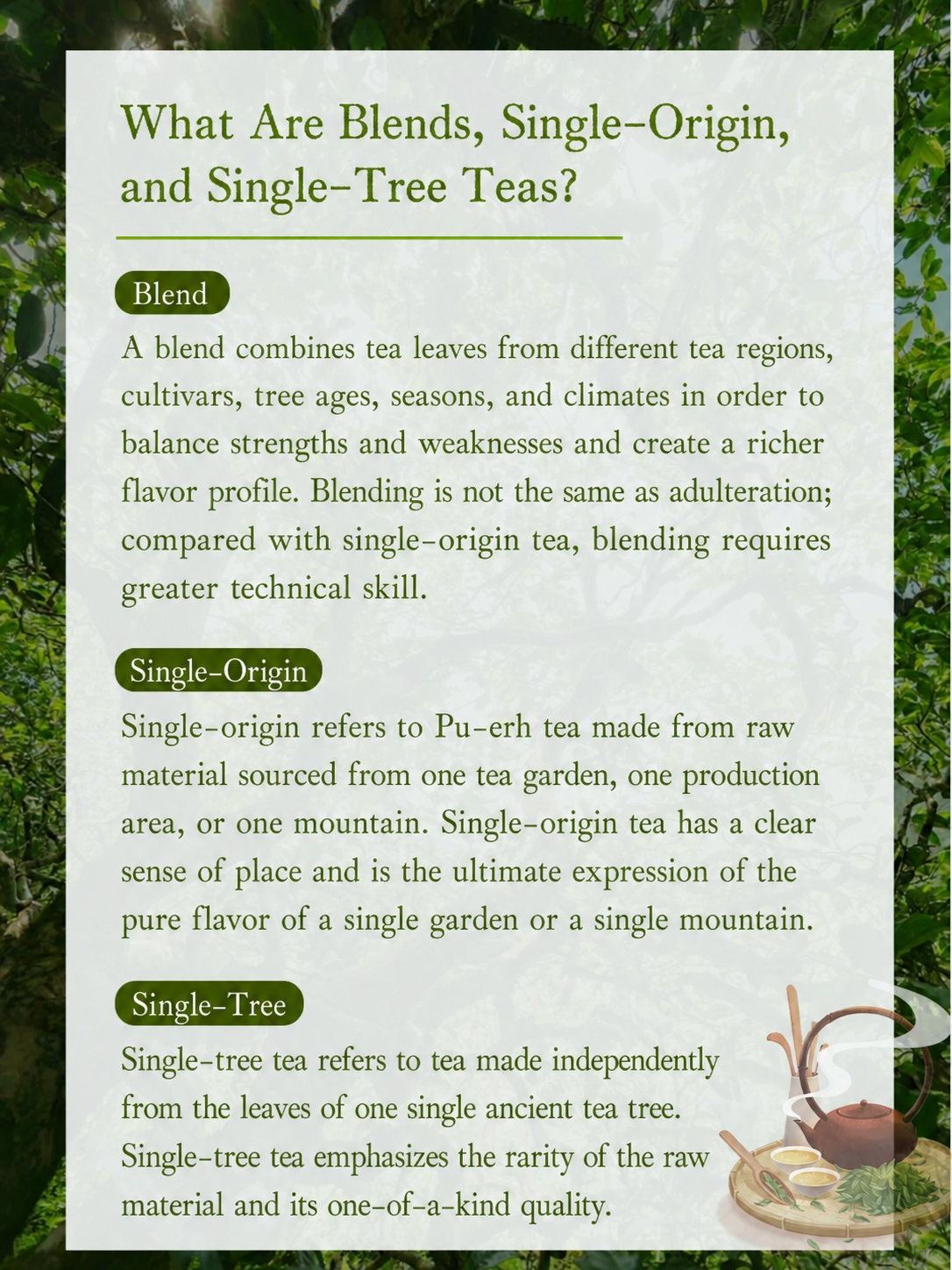
Blend, Pure Material and Single-Tree Pu-erh
Pu-erh tea can also be described as blend, pure material or single-tree tea. These terms can be confusing for beginners, but they are important when choosing Pu-erh.
What Is Blended Pu-erh Tea?
Blended Pu-erh is made by combining tea leaves from different regions, tree ages, seasons, grades or flavor profiles. A good blend is not fake tea.
In fact, blending can require a high level of skill. The goal is to balance strengths and weaknesses, making the tea more stable, rounded and enjoyable. Blended Pu-erh can be a good choice for daily drinking because it is often more consistent and affordable.
What Is Pure Material Pu-erh Tea?
Pure material Pu-erh usually refers to tea made from one tea garden, one origin, one mountain or one village. The biggest value of pure material tea is its clear regional character.
If you want to taste the personality of Yiwu, Jingmai, Bingdao, Lao Banzhang or other famous tea areas, pure material tea can help you understand that specific origin.
What Is Single-Tree Pu-erh Tea?
Single-tree Pu-erh means the tea is made from one individual ancient tea tree. This type of tea is rare because one tree produces a limited amount of leaves. It is often expensive and usually made in very small batches.
Single-tree tea emphasizes uniqueness and rarity. However, beginners should be careful with this term. Because it is difficult to verify, it is best to buy single-tree Pu-erh only from a highly trusted source.
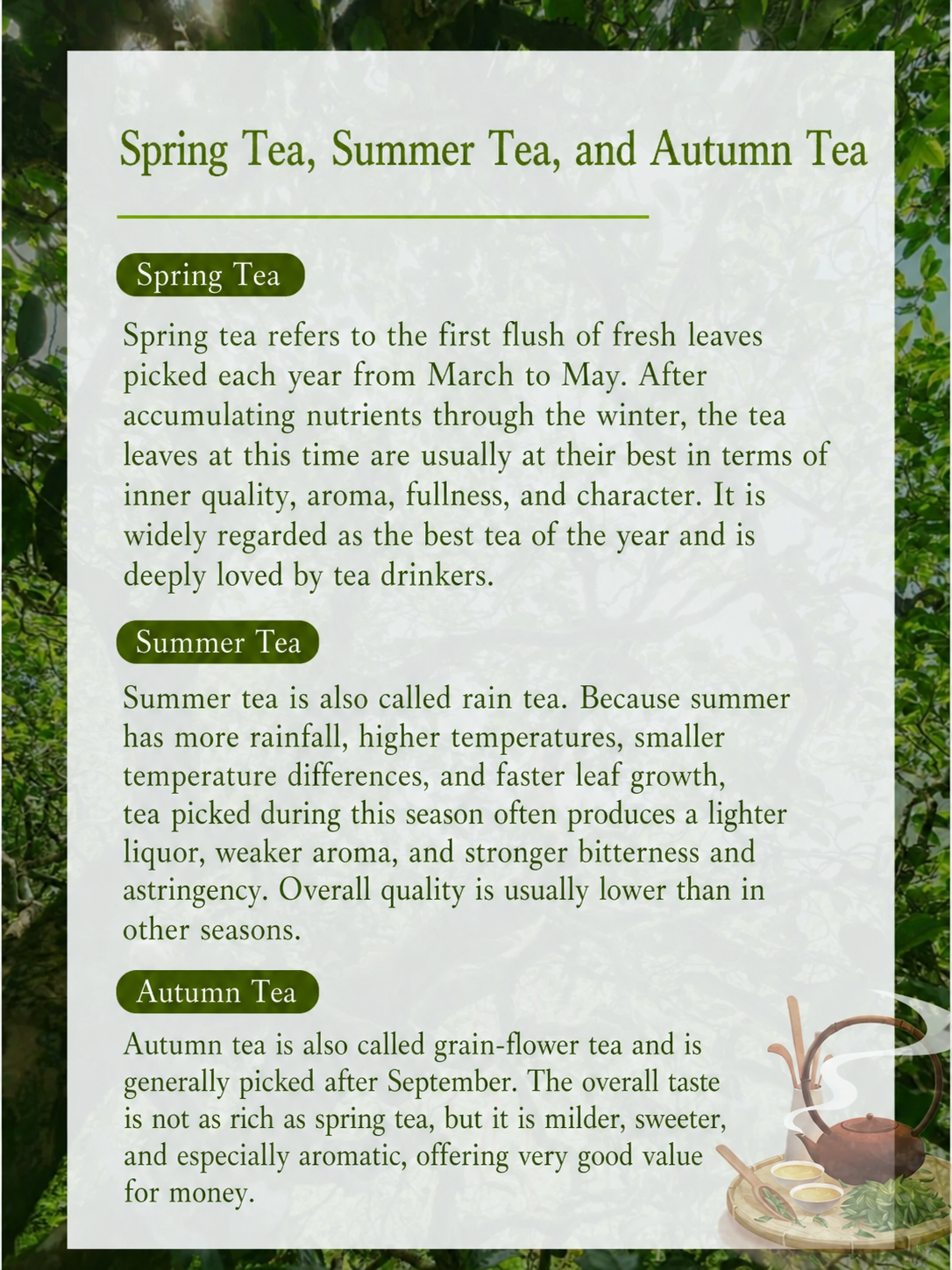
Spring Tea, Autumn Tea and Rainwater Tea
Harvest season can greatly affect Pu-erh tea quality and price.
How to Store Pu-erh Tea at Home
Pu-erh tea storage is very important. Good tea can be damaged by poor storage. The basic principles are: clean, dry, dark, odor-free and ventilated.
1. Keep Raw, Ripe and Aged Tea Separate
Raw Pu-erh, ripe Pu-erh and old tea should be stored separately. If they are stored together for a long time, their aromas may mix and affect the taste.
2. Avoid Strong Smells
Tea absorbs odors easily. Keep Pu-erh away from kitchens, perfume, incense, smoke, spices, cleaning products and damp wooden cabinets.
3. Avoid Direct Sunlight
Do not store Pu-erh tea in direct sunlight or strong artificial light. Light and heat can damage aroma and flavor.
4. Keep It Dry
Moisture is one of the biggest dangers for Pu-erh tea. If tea becomes moldy, it should not be consumed.
5. Use Suitable Containers
For home storage, you can use clean cardboard boxes, ceramic jars, purple clay jars or sealed bags, depending on your environment.
Does Pu-erh Tea Expire?
Pu-erh tea is different from green tea. Green tea is usually best enjoyed fresh, while Pu-erh tea can age and develop over time. When stored properly, Pu-erh tea does not expire quickly in the same way as fresh green tea.
However, this does not mean Pu-erh tea can survive any condition. If Pu-erh tea becomes moldy, sour, damp, dusty or contaminated by odors, it can be ruined.
Properly stored Pu-erh may become smoother and more aromatic with age. Poorly stored Pu-erh may simply become unpleasant or unsafe to drink. Pu-erh tea can age beautifully, but only when it is stored correctly.
How to Choose Pu-erh Tea as a Beginner
If you are buying Pu-erh tea for the first time, do not start with the most expensive or rarest tea. Start simple.
Most importantly, buy from a seller who clearly explains the tea’s origin, type, season, storage and taste.
Final Thoughts
Pu-erh tea may seem complicated at first, but its basic logic is easy to understand. It comes from Yunnan. It is divided into raw and ripe tea. It can be made from plantation tea or ancient tea trees. It can be blended, pure material or single-tree tea. It changes with harvest season and storage.
For Western tea lovers, Pu-erh tea is one of the best ways to explore the depth of Chinese tea culture. It is not only about flavor. It is about origin, time, craftsmanship and the quiet transformation of tea.
If you are new to Pu-erh, start with one clean ripe Pu-erh and one approachable raw Pu-erh. Brew them slowly, compare the taste, and let your own palate guide the journey.